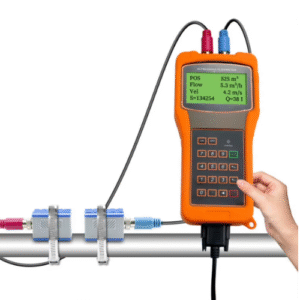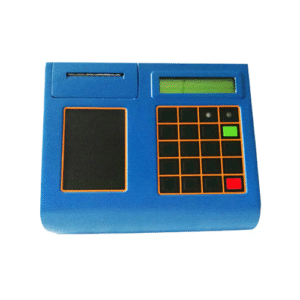
Ultrasonic Flow Measurement Meters
Selecting the appropriate measurement apparatus depends heavily on the hydraulic conditions and the physical properties of the fluid being monitored. Non-invasive pipeline flow analysis requires distinct technological approaches to guarantee accuracy across diverse construction scenarios.
Transit-Time Differential Technology
Transit-time differential flow meters rely on a fundamental principle of physics: the travel time of an acoustic signal is directly affected by the velocity of the medium through which it travels. These meters use paired ultrasonic transducers that alternate between transmitting and receiving. The system measures the precise time taken for a sound pulse to travel across the pipe upstream versus downstream.
Because the fluid motion accelerates the downstream pulse and retards the upstream pulse, a measurable time difference ( ) exists. This is directly proportional to the average flow velocity of the liquid. The internal microprocessor then applies the pipe diameter, fluid type, and acoustic path geometry to convert this velocity into highly accurate volumetric measurements (e.g., GPM, L/s).
Within the structural engineering environment, transit-time meters are the superior choice for clean, single-phase liquids. This includes chilled and hot water loops for HVAC systems, potable water distribution, and various process chemicals used in modern industrial construction. Their non-invasive nature means they introduce zero pressure drop and eliminate any risk of leak paths, which is critical during system integration and hydrostatic testing.
Doppler Shift Reflector Technology
For liquids laden with suspended solids, entrained air bubbles, or significant turbulence, Doppler shift technology is employed. This method leverages the Doppler effect, wherein the frequency of a sound wave changes as it reflects off a moving object. A Doppler flow meter utilizes a sensor that transmits a continuous ultrasonic signal at a fixed frequency into the flow stream.
This signal is reflected by particles, bubbles, or eddies moving within the fluid. Due to the motion of these “reflectors,” the reflected signal returns to the transducer at a shifted frequency. The meter calculates the difference between the transmitted and received frequencies. This frequency shift is directly proportional to the velocity of the moving particles, and by extension, the fluid velocity.
Solution architects specify Doppler meters for dewatering operations during excavation, analyzing wastewater flow from temporary construction facilities, and monitoring cement slurry transfer rates. These applications involve fluids too opaque or heterogeneous for transit-time acoustic paths. Like their transit-time counterparts, Doppler clamp-on options provide significant operational flexibility without requiring modifications to installed infrastructure.
A critical architectural decision for system integrators is choosing between clamp-on and inline spool-piece sensor mounting formats.
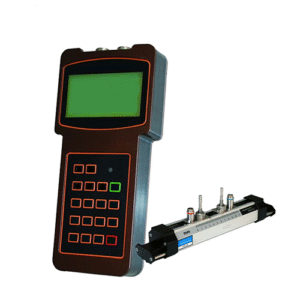
- Non-invasive Clamp-On Sensors: These devices represent the epitome of non-destructive testing in fluids. Transducers are mounted to the exterior pipe wall using custom fixtures and acoustically couplant grease or epoxy. This architecture is favored for commissioning, temporary balancing, and retrofit applications where breaking the pipe boundary is prohibited. Since the transducers possess no wetted parts, they resist chemical attack and prevent fluid contamination.
- Inline Spool Pieces: For long-term utility billing, critical custody transfer, or applications requiring the highest possible accuracy, inline spool pieces are utilized. These consist of a section of pipe with pre-installed, factory-calibrated ultrasonic transducers. While requiring pipe modification, this configuration ensures optimized flow profiles and fixed acoustic path lengths, delivering superior measurement linearity across a wider dynamic range.
With a growing B2B presence across North America, we lead in technology innovation and product reliability, ensuring that our sensor suites can withstand the dynamic conditions of active construction sites.
Modern structural projects require measurement solutions that adapt to complex integration variables. Technical executives demand flexible hardware configurations to ensure data acquisition is both reliable and comprehensive.
Integrated Thermal Energy (BTU) Calculations
By integrating twin temperature inputs (typically paired Pt100 RTDs) with the acoustic volumetric flow measurement, our systems perform real-time thermal energy calculations. Solution architects deploy this configuration to quantify energy transfer within hydronic heating and cooling systems. The electronics module calculates thermal output based on the volumetric flow rate, the temperature differential between the supply and return lines, and the fluid’s specific heat capacity. This functionality is crucial for LEED certification validation and comprehensive HVAC system balancing during the final vertical build phase
Multi-Channel Measurement Architectures
To address severe velocity profile distortions caused by upstream piping geometry (e.g., tight elbows, partially closed valves), multi-channel ultrasonic flow measurement meters are deployed. These advanced systems utilize multiple paired acoustic paths within a single conduit. By averaging the readings from distinct paths, the meter mathematically corrects for swirling and asymmetric flow, significantly improving accuracy in non-ideal installation scenarios. Furthermore, multi-channel modules can be configured to monitor two separate pipelines simultaneously using a single electronics converter, reducing the total hardware footprint and simplifying data integration for system integrators.
Telemetry and SCADA System Integration
Data handling is a primary consideration for modern IT professionals. Our ultrasonic instrumentation features comprehensive output configurations, including standard analog current loops (4-20 mA), frequency/pulse outputs for totalizing, and digital communication via RS-485 Modbus RTU. Solution architects increasingly utilize native BACnet/IP or Modbus TCP/IP interfaces for direct integration into building automation systems and SCADA networks. Integrated data logging capabilities allow for continuous recording of flow velocity, volumetric rate, thermal energy, and signal quality metrics, providing comprehensive diagnostic logs for longitudinal performance analysis.
Field-Portable Commissioning Kits
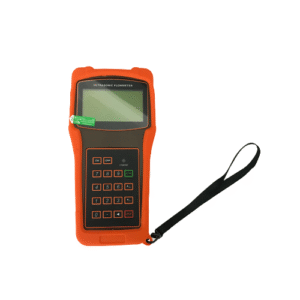
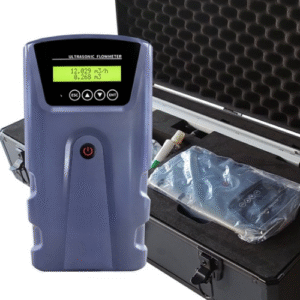
For procurement teams seeking maximum asset utilization, we offer complete field-portable kits based on our high-end non-invasive flow sensors. These robust systems include rechargeable battery packs, robust waterproof enclosures, multi-sized clamp-on transducers, and universal mounting hardware. These kits facilitate rapid hydronic testing across entire facilities, enabling engineering teams to move efficiently from zone to zone during building systems acceptance testing without requiring a permanent investment at every measurement point.
Through research, continuous product development, and expert guidance, Enviro Test Construct helps businesses streamline operations and unlock the full potential of testing and measurement solutions by providing engineering analysis and support from design to deployment.
- HVAC Hydronic System Balancing: Clamp-on sensors provide solution architects with non-invasive volumetric data necessary to balance chilled water and hot water loops, optimizing building energy performance.
- Fire Sprinkler Infrastructure Acceptance: Field engineers utilize portable acoustic meters to verify adequate flow rates at distinct points in the sprinkler network, ensuring compliance without permanent system penetration.
- Pipeline Leak Detection: Continuous data logging by ultrasonic velocity sensors helps identify unmetered flow or pressure-independent drops within temporary during-construction piping infrastructure.
- Cooling Tower Capacity Validation: Measuring condenser water flow allows engineers to calculate exact cooling capacity and verify actual performance against designed thermal specs.
- Wastewater Lift Station Analysis: System integrators deploy Doppler technology non-invasively to assess pump efficiency and volumetric discharge in challenging, particle-heavy fluid environments.
- Potable Water Pump Tuning: Acoustic meters facilitate precise tuning of variable frequency drives on booster pump skids to ensure adequate domestic water pressure non-invasively.
- Concrete Batch Plant Water Monitoring: Inline ultrasonic meters manage the exact water-cement ratios required for structural concrete while resisting harsh environmental conditions.
- Construction Dewatering Assessment: Field engineers monitor extracted groundwater volumes non-invasively to verify compliance with discharge permits and environmental site assessments during excavation.
Structural projects in the USA and Canada must adhere to complex regulatory frameworks governing fluid systems. The deployment of accurate instrumentation is necessary to generate the data required for compliance validation.
- ANSI/ASME MFC-5.1 Differential Pressure Flowmeters (used for inline spool piece design)
- ANSI/AWWA C750 Transit-Time Flowmeters in Full Pipe
- ANSI/ASHRAE Standard 111 Measurement, Testing, Adjusting, and Balancing of Building HVAC Systems
- Measurement Canada approval for inline utility billing applications
- CSA C22.2 No. 61010-1 Safety Requirements for Electrical Equipment for Measurement, Control, and Laboratory Use
- CSA B125.1 Plumbing Supply Fittings (relevant to material compatibility)
- NIST Traceable Calibration Data for validating measurement accuracy
- Provincial and State-specific dewatering permit regulations requiring accurate volumetric tracking
The construction industry presents unique engineering challenges, from immense ambient electrical noise to a variety of pipe materials. Generic testing equipment often fails in these hostile conditions. We use advanced signal processing to ensure measurement stability in situations where standard meters provide erratic data.
Proprietary Digital Signal Processing (DSP)
Our instruments utilize advanced Digital Signal Processing algorithms to actively cancel acoustic and electrical noise. This includes suppression of ultrasonic signals generated by machinery vibrations or valve cavitation. For transit-time differential flow meters, our DSP employs auto-setup wizards that continuously measure and adjust to the fluid’s sound velocity. If the fluid density or temperature changes, the DSP algorithm dynamically corrects the dT measurement, maintaining non-invasive accuracy. For Doppler measurement probes, we use proprietary anti-interference technology that distinguishes reflections from fluid motion from noise caused by metallic piping interference. Solution architects love this capability because it provides reliable readings in close proximity to heavy industrial equipment.
Cross-Correlation Peak Detection
A critical innovation in our transit-time meters is the use of cross-correlation peak detection. This technique allows the meter to lock onto the correct acoustic pulse signature, even when the signal-to-noise ratio is severely degraded by internal scale buildup, entrained air, or complex turbulence. By digitally matching the received waveform to the transmitted pulse, the cross-correlation algorithm can extract DT data with microsecond precision, enabling accurate fluid diagnostics in installed piping where rivals fail.
Advanced Couplant Engineering
Acoustic coupling is the foundation of any non-invasive flow measurement analysis. Our solution architects have engineered proprietary couplant compounds optimized for North American climate extremes. Unlike generic gels that dry or liquefy at high temperatures, our high-temperature couplants remain stable, ensuring continuous data acquisition on steam lines and hot-water loops. Conversely, our low-temperature compounds resist freezing, enabling watering monitoring in freezing winter conditions. We also provide long-term adhesive epoxies that eliminate the need for mechanical clamps on permanent retrofit installations, significantly reducing the total cost of ownership for procurement teams.
Fluid Dynamics Diagnostic Expertise
We provide expert guidance integrated with our hardware. Solution architects at Enviro Test Construct perform complex acoustic coupling analysis and fluid diagnostics for challenging pipe materials (e.g., cast iron, cement-lined, or composite pipes). We ensure proper path geometry and V-, W-, or Z-mount transducer configurations based on specific dynamic viscosity and Reynolds number values. System integrators love non-invasive retrofits because our diagnostic data can be integrated into SCADA systems without operational shutdowns. This technical capability ensures that solution architects can rely on the data used for final building diagnostics and validation solutions. We provide specialized environmental diagnostics and measurements with the precise technical focus necessary for enterprise construct optimization.
Ensuring the non-destructive integrity of fluid infrastructure while validating performance quotas requires technically deep non-invasive pipeline flow analysis. For technical consultation regarding acoustic sensor networks, integration with SCADA layers, or B2B procurement inquiries for high-precision field kits, our engineering solution architects are ready to assist. Please Contact Us at Enviro Test Construct to discuss your specific infrastructure validation requirements and discover how our expertise can streamline your next structural acceptance testing sequence.
Showing 193–204 of 224 results
- Ultrasonic Flow Measurement Meters
Industrial Handheld Ultrasonic Water Flowmeter – Enviro Test Construct
Read more - Ultrasonic Flow Measurement Meters
IP68 Handheld Ultrasonic Flow Meter Battery Powered with High Accuracy – Enviro Test Construct
Read more - Ultrasonic Flow Measurement Meters
Portable Digital Ultrasonic Handheld Water Flow Meter – Enviro Test Construct
Read more - Ultrasonic Flow Measurement Meters
Portable Handheld Clamp-On Ultrasonic Flow Meter – Enviro Test Construct
Read more - Ultrasonic Flow Measurement Meters
Portable Handheld Ultrasonic Flow Meter – Enviro Test Construct
Read more - Ultrasonic Flow Measurement Meters
Portable Handheld Ultrasonic Flowmeter for Water &Amp; Oil Measurement – Enviro Test Construct
Read more - Ultrasonic Flow Measurement Meters
Portable Handheld Ultrasonic Flowmeter with OEM Support – Enviro Test Construct
Read more - Ultrasonic Flow Measurement Meters
Portable Handheld Ultrasonic Water Flow Meter – Enviro Test Construct
Read more - Ultrasonic Flow Measurement Meters
Portable Handheld Ultrasonic Water Flowmeter – Enviro Test Construct
Read more - Ultrasonic Flow Measurement Meters
Portable Ultrasonic Clamp – On Flow Meter with Data Logger – Enviro Test Construct
Read more - Ultrasonic Flow Measurement Meters
Portable Ultrasonic Flow Meter Handheld Clamp-On Liquid Sensor – Enviro Test Construct
Read more - Ultrasonic Flow Measurement Meters
Portable Ultrasonic Liquid Flow Meter Handheld Water Flowmeter – Enviro Test Construct
Read more